


The Importance of Digital Transformation for Modern Businesses
Introduction:
In the fast-paced business world of today keeping the same approach means getting behind. Digital transformation is no longer a luxury only for large businesses. All businesses need to embrace business digital transformation to stay relevant, provide better service to customers and continue to grow. The main issue isn’t whether or not to change, but rather how to begin and how fast to make the change.
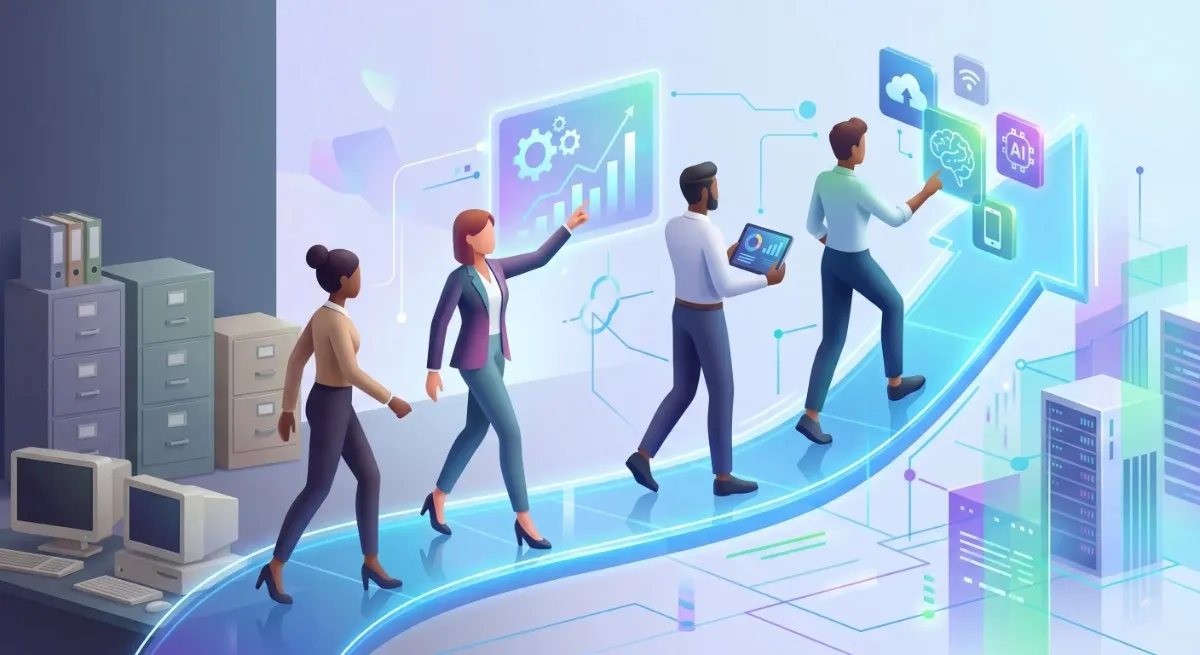
What is Digital Transformation? : The most straightforward digital transformation definition is this is the act of using technology to transform the way in which an organization operates and the way it provides benefits to its clients. Transformation in business technology isn’t solely about buying new software. It requires rethinking how the entire business functions from internal processes to how teams interact.
Key Elements of Digital Transformation: Digital transformation impacts four key areas: processes, technology people, process, and the customer experience. Each of these areas requires together. Innovations in technology without a change in attitude will not yield results. The best processes without the right tools can slow things down.
Difference Between Digitization and Digital Transformation:Many people are confused by the two terms. Digital transformation simply refers to the conversion of physical data into digital format, much like scanning papers. Digital transformation is a lot more extensive. It is the use of technology to completely redefine how businesses create and deliver value. One step is one while the other is a continuous process.
Why Businesses Need Digital Transformation: The drive to change comes from every direction. Innovation in the field of digital technology is now the primary factor in the growth of companies and those lost. The delay in technology adoption in business is no longer a sensible option.
Changing Customer Expectations: Today’s customers expect fast, smooth, seamless, and personal experiences. If they’re shopping online, contacting support or using apps, they expect things to function quickly and seamlessly. Companies that fail to provide this kind of experience are likely to lose customers to businesses that do.
Increasing Market Competition: The latest, technologically-driven businesses are entering every sector and disrupting the traditional methods of business. Fintech startups are taking on traditional banks. Brands on the internet are drawing customers away from traditional retailers. The competitive edge now belongs to companies that are agile and technologically adept.
Need for Operational Efficiency: Costs are rising and margins are becoming more tight. Companies must find better ways to operate. Digital tools allow for the automation of repetitive tasks, eliminate errors and speed up day-to-day processes. This saves the time of employees and also money which allows businesses the chance to grow.
Security and scalability: Security is not only that unsaid word but also something that can never be detached from this particular industry even for a microsecond. Sensitive operational data needs to be protected with enterprise-grade cyber frameworks. Keeping this in mind, SanshTech builds secure-by-design data architectures which are equipped with encryption, access controls and robust audit trails.
Lower infrastructure costs: Legacy systems are not only expensive to maintain, but also slow to upgrade. By transitioning to cloud-native and automated data systems, energy companies significantly reduce operational costs. SanshTech helps enterprises shift from outdated infrastructure to modern, cost-efficient digital ecosystems.
Automated monitoring and Alerts: We understand the value of operational responsiveness. Therefore, we have built automated monitoring systems with intelligent alert mechanisms which ensures that decision-makers are instantly notified when performance thresholds are breached.
Data Analytics and Business Intelligence: A majority of businesses have important data, but are not making the most of it. Analytics tools assist in turning the data into clear information about operations, customers and trends in the market. If businesses base their decisions on actual data, not intuition, they achieve better results over time.
Internet of Things (IoT): IoT connects physical machines and devices with digital devices. It gives companies real-time access to their activities for monitoring the equipment in a factory or tracking inventory in the warehouse, or monitoring the energy consumption of buildings. This results in faster response times and less unexpected issues.
Benefits of Digital Transformation: These digital transformation benefits are clear and quantifiable. The technology-driven growth is evident in tangible numbers, such as revenues, cost savings, customer retention, as well as the value of business..
Improved Customer Experience: Digital tools let businesses respond quicker, customize interactions, and offer the same level of customer service throughout all platforms. Customers who are happy remain longer and spend more money, as well as encourage others to do the same to them, which all add up to a significant increase in business in the long run.
Better Data-Driven Decisions: If leaders have access to current, accurate data they can make quicker and better decisions. They can identify problems earlier or identify new opportunities and place resources where they can make the greatest impact.
Increased Operational Efficiency: Automation and integrated systems can reduce human error and wasted effort. Businesses can manage more work without having to employ a proportionally larger number of people to manage costs even as the company expands.
Business Scalability: A digitally-enabled business can expand without the systems failing. Cloud-based systems, automation of workflows and connected tools allow businesses to handle greater quantities without an enormous rise in overhead costs.
How SanshTech Supports Digital Transformation: SanshTech offers useful digital transformation consulting and technology solutions for businesses that focus on measurable, tangible results.
Technology Strategy and Consulting: SanshTech begins by understanding the business objectives before suggesting any specific technology. SanshTech develops a detailed digital transformation strategy that includes an assessment of your technology along with a step-by-step roadmap and a plan to manage changes within your business.
Custom Software and Automation Solutions: The software that is generic often doesn’t meet the needs of a business that is growing. SanshTech creates customized software and automation tools specifically designed to meet your specific processes, ranging from integrations with existing systems, to user-facing apps or internal platforms.
Cloud and Data Integration: SanshTech assists businesses to move their operations to cloud computing, create information systems and join devices which do not yet work together. These integrations build an enduring, flexible foundation that will allow for long-term growth than a quick fix.
Challenges in Digital Transformation: Knowing the most typical digital transformation challenges upfront helps companies to plan more effectively and avoid costly errors. The challenges of implementing technology are not uncommon but they can be addressed when you have the right partner.
Legacy Systems: The older systems were not designed to be compatible with the latest technology. Making the transition from older systems requires meticulous planning and a step-by-step strategy to avoid disrupting daily activities.
Data Security Concerns: As businesses expand their operations online data is becoming more crucial. Cybersecurity must be included in the strategy for transformation right from the start and must be able to meet all regulatory or legal obligations that pertain to the company.
Lack of Skilled Talent: Finding and keeping highly skilled tech professionals is a challenge in the present. A lot of companies do not have the expertise in-house to implement a change by themselves. Partnering with a seasoned technology partner can bridge the gap while also gaining internal capabilities in the course of time.
Conclusion: A transparent digital transformation roadmap will be the initial step to becoming a futuristic business technology leader. It’s not about trying to keep up with the most recent technologies. It’s about making strategic, smart investments in the systems and tools which will allow your business to grow, evolve and be competitive for the next few years.
The companies that are taking action now do not only solve immediate problems. They are laying the foundations for a future market dominance. There is a chance and the time to take action is now.
FAQs
- Why are energy companies upgrading their data systems in 2025?
To improve efficiency, enhance decision-making, and manage growing volumes of operational data. - How does SanshTech support digital transformation in the energy sector?
SanshTech provides cloud migration, data engineering, AI automation, and energy-focused application development. - What benefits does AI bring to energy companies?
AI automates reporting, predicts failures, improves accuracy, and speeds up operational workflows.
Based in Calgary, Canada, SanshTech has helped hundreds of businesses thrive. With expertise in AI, ML, mobile development, digital marketing, and more, we don’t just build, we build empires.
Contact: +1 587-394-2345